Monday, February 24, 2014

Show Me The Money: Pay "These" Teachers More

I know some teachers who feel this way and should!

This past Saturday, 60 + teachers from various school districts came to Rockhurst University for workshops through TEAM (Technology and Educators Advancing Missouri Science) Science. TEAMScience is the name of a consortium facilitated by a small group of us (educational professionals) who applied and were awarded a $500,000 yearly DESE grant to provide professional development stipends for teachers to integrate science and technology into their K-5 lessons. These teachers came with smiles, positive attitudes and worked hard ALL day through interactive experiments and learning activities. I'd like to think it was because of the impressive and engaging workshops we did (insert wink), but maybe it also had something to do with their benefits of the grant. Which is perfectly acceptable. We thought carefully about the benefits of this grant and wanted to make these teachers feel special for their commitment to this project:


Benefits of the grant include:

  • Up to $2,850.00 stipend for summer institutes, plus additional funds for mentoring activities
  • $100.00 for each additional training day (6 Saturdays per year)
  • Membership in National Science Teachers Association & Science Teachers of Missouri ($100 value)
  • In-classroom coaching and demonstrations from master teachers with elementary experience
  • 4 hours of graduate science credit from Rockhurst University (participants responsible for processing fee)
  • Free resources and materials for your classroom; plans are to provide one electronic tablet (e.g. I-Pad) per participant & one pair of Google Glasses per school district
  • Travel expenses for attending field trips
  • Support in preparing grant applications and professional presentations
Why would we want to do this...pay them double and provide them with all these perks? Because these teachers deserve it.

We all know that no one goes into teaching thinking "I'm going to strike it rich."  At least that was true for me. I had two other jobs (coaching and retail) my first four years of teaching. Then I continued to work at Ann Taylor my first year as an administrator (at least there was a nice discount for professional wear!). Several of my teacher friends worked weeknights and weekends at other various jobs as well. Many of us were also working on our master degrees. It was what you had to do if you wanted to stay afloat. Now, I wasn't married and didn't have a family, so I guess you could say that I had some extra time.  But, I would observe my fellow teachers bring their kids to school in the morning while they set up their classrooms for the day, or talk about how much grading they would need to do when their families went to bed. All of this happening outside their 'contracted" time. Sadly, it's still that way. While there are certainly some financial perks to teaching; benefits, retirements, a few holiday breaks, it's overwhelming obvious we do not pay these quality teachers what they deserve.

The image below shows the overall state averages for teacher salaries. Please keep in mind there is variance between schools (rural, suburban, urban, private, public, parochial, charter, magnet) depending on the content taught, grade level, years of experience and degree levels of each teacher. Not only do teachers start out at lower salaries, but as the years of experience grow, the gap widens compared to other professions. Teachers make 14% less than professionals in other occupations that require similar levels of education and contracted time. Some articles compare teacher pay to that of a toll taker or bartender.


This is disappointing as the majority of these teachers have many years of experience and multiple degrees. Above all, many of these teachers are incredible at their craft.

Ideas on how we can we pay these teachers more:

Pay It Forward:   Want teachers to attend useful conferences and workshops, the school must pay for them and their traveling expenses. Upon their return, have them think about what they can share with other professionals in their field. Let's be completely honest, if a teacher is attending a workshop/additional professional development experience outside of school (i.e. taking time out of the classroom with travel costs covered), they could come back and share in some platform.  The school could even efficiently send one of these effective teachers to learn more about a particular area of education and have them come back to explain and teach what they learned to a group of teachers. The money saved could be used to provide an additional stipend for the teacher sent. I was just at a conference where a district sent about 50 teachers to the same conference, and many of them went to the same breakout sessions, and workshops. Why not send 10 from different grade levels, content areas and have them come back and share as experts? Stipends for this idea or not, money could be saved and placed elsewhere to enhance teacher pay.  Plus, teachers want to hear from other expert teachers during professional development days. Speakers have their time and place, but in my experience, teachers IN the trenches want to hear from teachers IN the trenches.

It's All About the Benjamins:  Do not pay a quality teacher an extra $10 or $15 an hour for an after school club or additional leadership responsibilities. Give them a stipend worth their time. If offered a low amount, teachers should always negotiate as much as possible. Contact hours with students alone DO NOT equate to the planning involved prior and after with these types of activities. Teachers who are asked to be leaders in and out of the classroom are known to always go the extra mile. Then these teachers only end up making a few dollars an hour once it is all said and done.

Mo' Money Mo' Problems?  Let's talk about merit pay. If you are unfamiliar with what 'merit' pay means, here's the down low: teachers are paid more depending on their performance and completion of extra duties and responsibilities. They are often compared to other teachers as to 'how much' time and professionalism is devoted outside of their contracted teaching requirements. There are merit pay programs where performance in the classroom is also evaluated, and their students' standardized test scores. This often causes competition between teachers. Research shows that it has not had an effect on raising student performance in the classroom.  However, it has kept many of these amazing teachers in the classroom who are already knocking the socks off their kids and making a positive difference in the world of education. It does appear to be working in North Carolina, Denver and Dallas schools.

Take The Money And Run: Great teachers are kind hearted and truly want to do what is best for their students. Unfortunately, evil (yes evil!) people take advantage of of these teachers. If asked to provide additional training outside of the normal workday, tutoring, research, and/or attend a workshop on a weekend or beyond the normal contracted day, compensation needs to occur. Time beyond the contracted weekday is already spent with grading, meetings and following up on your teaching responsibilities. These teachers should: 
I've seen these teachers, kindly respond to an offered payment, "No, that's ok...I'm happy to help." Great teachers already volunteer for more than their share, so when presented with an opportunity to earn extra compensation (money) in your profession, take it and run....run to save it, or spend it!


Let's not allow these teachers transition out of teaching because we can't afford to keep them. Our schools need these teachers. 
Our kids need these teachers. 
We all need these teachers.


[NOTE: These teachers should not be confused or compared with those teachers. Those teachers who should not be teaching in the classroom and could be one of the main reasons these teachers are not getting paid more.]


Resources: http://www.washingtonpost.com/blogs/answer-sheet/wp/2013/12/15/how-much-teachers-get-paid-state-by-state/
http://www.scholastic.com/browse/subarticle.jsp?id=1882
http://www.nea.org/home/36780.htm

Monday, February 17, 2014

Going For the Gold: Hot.Cool.Yours


GO USA!  Many amazing stories and events coming out of the 2014 Sochi Winter Olympics. One of the questions I have heard asked several times is about  the slogan, "Hot.Cool.Yours."   Here it is broken down according to the organizing committee.


Hot: Expresses the intensity of the passion of the spectators.

Cool: Reflects the timing of the Games, and the cold climate of Russia.

Yours: Symbolizes the Olympians commitment, ownership and personal involvement in their successes and shows their sense of pride.


Five fascinating stories I feel define the Olympic slogan this year.
  • Keeping that spice:  Pure perfection and beauty come from Meryl Davis and Charlie White, our USA ice dancers. Dedication is obvious as they have been skating together for over 18 (wow!) years and it shows. It's not their technique they are focusing on but the movement.  They recently explained they want to elevate the competition and add more erotic moves bringing out the passion and excitement for free skate. In their interviews they discuss that it's not about pushing each other, but truly enjoying each other's company. Their coach, Zoueva, has been quoted as saying, "There is little room for improvement. My mission is that you can't take your eye from them. Everyone has to watch."  And boy, are we watching!
  • Back to the drawing board: Over 69 iterations completed on the the shape of the  BMW developed bobsled for Steven Holcomb and Steve Langton . It was all about keeping that balance of technology and real-world application. The developers used CFS (computational fluid dynamics) and then put the sled into action on the track. It was key to constantly go back and tweak the tension and other areas of the sled until Holcomb and Langton felt it was absolutely perfect. Countless test runs and being risk takers of innovation have helped Michael Scully,and his world class team of engineers, master the reinvention of the bobsled and skeleton. When there's less drag, they go faster. Less vibration allows for better sight conditions (their heads aren't bouncing around as much). The equipment had to be perfected. Tuffy Latour explains that these competitions are 90% mental, so the athletes have to believe they have the best equipment and coaching behind them. Even though there's a science to it all, at the end of the day, it's the ability to believe in yourself that gets you on the fast track.
  • Hit me with your best shot: Earning a bye to the quarterfinals, hockey team USA came out winners in the most anticipated game on Saturday against the Russians. Newton's Three Laws of Motion were observed (as they are in every game) throughout this thriller. Friction, force, mass, collision and action all play their special roles in this game of physical endurance. Science and mathematics are key to making the best shot. Hopefully, the Winter Olympics has you excited to learn more about hockey, it's truly amazing just how technical it is, despite our perception of players slapping around the puck and shoving each other.  Check it out for yourself! http://www.nbclearn.com/nhl.
  • Fashion faux pas: Are the high tech suits to blame for slowing down the USA Speed Skaters? I find this story fascinating because it brings us back to reality. Sometimes the newest technology, high tech interest, is not always the best. The speed skaters showed no increase in speed, actually the opposite, when they wore their high tech suits last week. This has caused the team to revert back to their former tech suits for the rest of the competition. What's even more interesting is that the Dutch are dominating the competition so far and they are basically out there in Lycra suits.  One of the USA coaches, Kip Carpenter, had this to say, "The human factor is the largest piece out there. There is not an athlete out there who is slowing down a second per lap because of what they are wearing." Which brings up the question, it is the suit or the athlete that is dragging? 
  • Rising above tragedy: Winning the bronze in the Super-G and persevering on to being the fastest skier on the Olympics and possibly the oldest in decades, Bode Miller is a true champion. The 36 year old truly shows age is just a number.  Thoughts about his deceased brother, "Chilly" Miller, who died of an apparent seizure  almost a year ago, are with him in Russia. He has been seen emotional and has discussed his late brother on several occasions. However, given his past record, nothing seems to keep him down. This amazing man grew up in cabin with no electricity or running water, was homeschooled until third grade, has penned a book, Bode: Go Fast, Be Good, Have Fun,  was the subject of documentary, Flying Downhill,  and when he missed the gate at the 2002 Winter Olympics, he hiked his way back up the 25 ft course to take on the slalom run,  which instantly gained him more notoriety. He defines unconventional.
As more stories unfold and exciting events progress, we all can learn a great deal from each one. Let's be HOT with fire and passion as we cheer others on, COOL enough to appreciate our surroundings and environment, know that each day is YOURS to be committed to and move forward in achieving whatever goal you have set for yourself.

Go for the GOLD!

Sunday, February 9, 2014

Rules: Make 'em or Break 'em?

Are your rules sending the message: "My way or the highway?"


I was lucky enough to have the two worst behaved 5th graders my first year of teaching.  Don't get me wrong, I had a great class, but when I think about that first year, I will always remember Vijay and Terrell. Vijay was very quiet and had a terrible temper. He would sulk all the way down in his chair anytime I started a math lesson and mumble under his breath (but for all of us to hear), "I HATE math."  Usually followed by, "...this is SO stupid."  He was unmotivated by every subject and his desk was so messy with crumpled up papers that I thought at any minute it would suddenly burst filling the whole room.  Terrell wasn't much better. Every second he was making some sort of noise with his mouth, fingers, feet, pencil, paper, ruler, chair, desk....you get the point. Like Vijay, he never did his homework either. Terrell was the class clown who loved to make everyone laugh, except me because he was constantly disrupting whatever learning I was trying to facilitate.  

Every day they broke rules I/the school made. From disrupting class, to running down the hall, too negative or too funny, pushed others around and rolled their eyes so many times at me that I thought they may not roll back.  To be honest, there were nights where I would go to the gym and run (what felt like) 30 miles to get out the frustration or walk in the door and down a glass of wine before I even took off my coat.  I tried to focus on the other 23 students who seemed to enjoy having me as a teacher, and who were following the rules. I just couldn’t get those two boys off my mind. They both hated me.

But I was blessed and thankful I had them.

Why? Because they made me a better teacher. You see, I learned there are sometimes too many rules. Rules about being in the classroom, out of the classroom. Rules on the playground, the bus. Rules about what to do when kids broke the rules. There were so many rules, the only time I really had a conversation with them were about the rules. I was making them and they were breaking them. It was a vicious cycle. Then something happened. After winter break, they both came back with smiles on their faces and in happy moods. I thought, "Whew, now we can start off the New Year right!" To keep us on the right track, I decided to find a private time to ask each of them why they were so happy and what they did over winter break. They both basically said, "we didn't have to come to school to see you." Wow, OUCH! 

That night I went home and realized I couldn't change them, but I could change me. I started to ask more questions in a nicer way, focused more on their positive behaviors, picked my battles when it came to rules they didn't want to follow and I kept a journal about them. I wrote down when I saw them smiling, and what they were saying and doing at that time. 

I found out that Vijay was so happy after winter break because his sister was home from college and he had missed her a lot. He said he was lonely when she was away because his parents worked all the time. I found out that Terrell was obsessed with Usher and Nelly.  He also loved to wear goggles on his head and sing rap songs. So, I made some changes. Whenever Vijay finished his work and showed a little bit of a positive attitude, he could take some time to write his sister letters or draw a picture for her. When Terrell did his homework and refrained from bothering those around him, he got to wear his "thinking" goggles all day (just like Usher's trendy goggles in the pic above) and we took commercial breaks during lessons so he could sing his favorite rap songs.  Instead of seeing their frustrated frowns, I started noticing their sensational smiles.  

When there were days where one or both of them started slipping up, I didn't have to say a word.  Their peers did.  "C'mon Terrell, we wanna hear you rap, where are your goggles?"  "Vijay, we want to see those cool pictures you always draw for your sister, do your work, dude!"  Their classmates started wearing "thinking" goggles, glasses and hats in class too. They also took time to write some of their loved ones letters, sing their own songs, or draw pictures when they were finished with their work. We all were much happier. There was less talk about rules and more time for learning.

In the courses I teach each semester, I touch on classroom management and rules, I share these thoughts with my undergrad and grad students about rules and expectations which I strive to follow.

1.   Communicate why there are rules. Gone are the days where you can just say, “Don’t do that.” Kids now want to know why and we should tell them. Why can’t they just sleep with their mobile devices? "Because I said so," doesn’t cut it. Instead explaining that it is harmful to your health and you need to unplug when it’s time for a good night’s rest.
2.   Be consistent. This is so challenging. I struggle with this at home as well. You have to follow through. Yes there are times when a rule for one kid may not be applicable to another one. Explain why and try to be consistent with the message you send each and every day.
3.   Have students/your kids set the expectations with you.  I love this one and have seen it work well. When setting rules and expectations ask them what they think should occur in the classroom. Why it is important?  They will take more ownership in following the rules if they have a hand in setting them.
4.   There are non negotiables.  You cannot sprint down the hall with scissors or yell profanities in the middle of class. Enough said.
5.   Some classrooms/families have different rules than yours. Another tough one. Don’t judge others for the rules, differences in rules, or (what appears to be) lack of rules they have. Just be true to your values and how you want your kids/students to behave. Always putting the child’s best interest first is the best motto to follow.


Whether you are a parent, and educator, or someone who is nice enough to read this blog, I hope you find these rules ones that you can follow. 


Just remember, some rules are meant to be broken. 
If they are, put on your thinking goggles and find a way to have fun!


Monday, February 3, 2014

Wake Up! I've Got Your Java

"Learning to write programs stretches your mind, and helps you think better, creates a way of thinking about things that I think is helpful in all domains.“ Bill Gates


I LOVE coffee. Let me be specific. I love lattes. Extra shots of expresso are always nice too. Cannot imagine my life without a Roasterie (Carmella, no whip and skim milk) or Latteland  (Brookside Bob with Almond milk) cup of magic each morning. There are things in life we all can't live without. How about you? Could you live without the Internet? Word Processing programs? Digital Games? Texting? Email? I think not. Computer Science is needed to function in society, especially in the US. 

Should Computer Science be the new requirement in schools?  It's the new rage in the news, school curriculum development, coffee shop conversations, and Hollywood has even jumped on board with several movies, Jobs, The Social Network, and The Internship. I've blogged before about the importance of coding and programming and I will continue to do so as it is extremely important for 21st century learning and progression. As will.i.am., an artist and musician with the Black Eyed Peas put it, " Here we are...we ALL depend on technology to communicate, to bank and NONE of us know how to read and write code. It's important for these kids, right now...to learn and write code."

Coding. Programming. Who cares? You should. For many years these terms have been kept to the underground world. You may have this perception of a room filled with selected nerds punching letters and symbols into a computer to bring the world games and software we need to live our lives. Not anymore.  It's time to wake up, smell the coffee, and  this is why:

1. We are short handed: Sad, but true: we are outsourcing many jobs that our youth are more than capable of doing. "There aren't enough people to fill these jobs because technology and the job market are moving much faster than education in high schools and colleges" explains Mark, Lassoff, founder of learntoprogram.tv .  India and China are the two biggest countries for programming and coding. 

2. Builds life-long skills: How do you inspire creativity and confidence in learners? You reach out to each students' interests. ALL OF THEM. I will tell you that you have to make a connection to real world application. I know there are times when parents and teachers struggle to find the answer to "when will I need to know this?"  Computer science requires creativity, risk taking and perseverance which will build confidence. Coding and programming require memorizing rules and identifying patterns. This improves your memory and strengthens your mental muscles. All of these things come in handy throughout the journey of life.

3. Requires you to think critically and follow directions: Learning how to code and program requires you to learn a second language. What's so intriguing about this new language is the challenge of having to think very clearly about what you are trying to 'say'. Just being off by a letter or adding one too many parentheses will leave you lost in translation. It can be every bit as engaging and thrilling as playing a game. One of the most popular coding languages is Java Script which is the scripting language of the web. Then there's HTML, which helps you build websites and CSS, which provides a way to control the style and layout of multiple web pages at once. See for yourself. Wanna make a dog fetch a ball? Code this. As far as programming, another avenue of computer science offers experiences in using building blocks to command the program you are creating to do exactly as you want. Try it out. Wanna make the Angry Bird catch the naughty pig? Don't just play it, program it!  It's much easier than you think.

4.Get a J.O.B.: These infographs speak volumes...


5. It's FUN, but don't force it  Let's face it, you really can't make kids learn. Every great teacher knows that.  You engage students by finding out what interests them. We are are lucky to have a variety of coding and programming resources (Hour of Code) out there which cater to a variety of learners. Encourage our youth to play games, learn the 'new' language and make it fun!  Offer food, a laid back environment, allow them to listen to good tunes, work with a partner, take breaks and work at their own pace with short term and long term goals. Think about it...this is real world application.


This Code Avenger is tough and smart.

Inspire Our Youth! My Five Fav Free List:
This Code Monster is  cute and creative.


Susan Wojcicki, Senior VP at Google,  sets it straight, 
"Learning to code makes kids feel empowered, creative and confident."  
If we want our students to retain these traits into their adulthood we need to start in their youth.
 Wake up! Give it a shot.


Other Resources: check them out.

http://www.stemconnector.org/sites/default/files/store/STEM-Students-STEM-Jobs-Executive-Summary.pdf

http://www.businessinsider.com/20-hilarious-programming-jargon-phrases-you-should-know-when-talking-to-engineers-2012-7

http://www.javacodegeeks.com/2012/11/20-kick-ass-programming-quotes.html

http://cs.brown.edu/~adf/programming_languages.html


https://docs.google.com/document/d/1yDA7roxMBCYw6jUXTGKx_SAk7gEAd-IZdLbZHzDIxtU/edit#heading=h.o5ufblwnoh93


http://www.edutopia.org/blog/coding-new-foreign-language-requirement-helen-mowers

Tuesday, January 21, 2014

Think Outside the Box: Redesigning Classrooms For Students

Active learning environments are key to student success. So jump out of that old box!

Think about your recent experience in the classroom. Did the seating arrangement remind you of a box? Most classrooms are set up in the square, rowed seating arrangement. How do we move past this? How do we set up classrooms FOR students, not for teachers. Think about it, classrooms are set up for teachers, 'all eyes on me' type of focus. I'm not insinuating teachers even want it this way, it's just the way buildings are built and rooms are designed. Is that the best way for students to learn? We know through experience and research that students do learn best when they are actively involved:  able to probe, process, discuss, discover, investigate, and inquire through hands-on activities and discussions. Can students critically think, collaboratively learn,and openly share if they feel boxed in? 

What is the resolution? We can move towards classroom designs which offer students and educators options for teaching and learning together.  Rockhurst University is taking the lead on this initiative. Starting this Spring, faculty and students will get to enjoy more collaborative and innovative spaces in Sedgwick Hall. 


Part of a pilot plan to practice and develop innovative learning environments for active engagement, three classrooms have been redesigned with movable furniture, new technology tools and a fresh color scheme.  Sedgwick 229 shows some of the more dynamic changes with café-style group seating, high top tables, rectangular tables and "huddle boards” which are whiteboards mounted or taken down for groups to write thoughts and discuss then placed back on the wall.  All the furniture can be moved and easily rearranged from one class period to the next. Sedgwick 224 offers another interesting approach with access for all students to link their mobile devices to a monitor at the end of each of the six group tables. This will diminish interruptions and enable students in sharing their work with their peers and instructor. Take a look:


These changes come with continuous support for faculty. An initial training was given last week and I will be working with CETL to provide ongoing training for instructors who would like to discuss, learn, and plan out how to use these new spaces to deliver the variety of content, to a variety of learning styles in a variety teaching methods.Encouraging them to use their own toolBOX and open it up to provide more enriching opportunities for their students and themselves.It's a new year with new beginnings and freedom. Here's to opening ourselves to being risk takers and getting rid of those boxes which are keeping us closed in.


Other initiatives RU has opened to faculty and students;

RU Article about new classrooms: http://www.rockhurst.edu/news/article/rooms-offer-sneak-peak-academic-innovations/ Zoom: http://www.rockhurst.edu/news/article/zoom-platform-opens-new-education-avenues-rockhurst/

Flipping the Classroom: http://www.knewton.com/flipped-classroom/

Collaborative Spaces: http://thejournal.com/articles/2013/02/13/designing-collaborative-spaces-for-schools.aspx?=THE21

Tuesday, January 14, 2014

Nicaragua: Digging Deeper

"Whatever you do, work at it with all your heart..." Colossians 3:23.

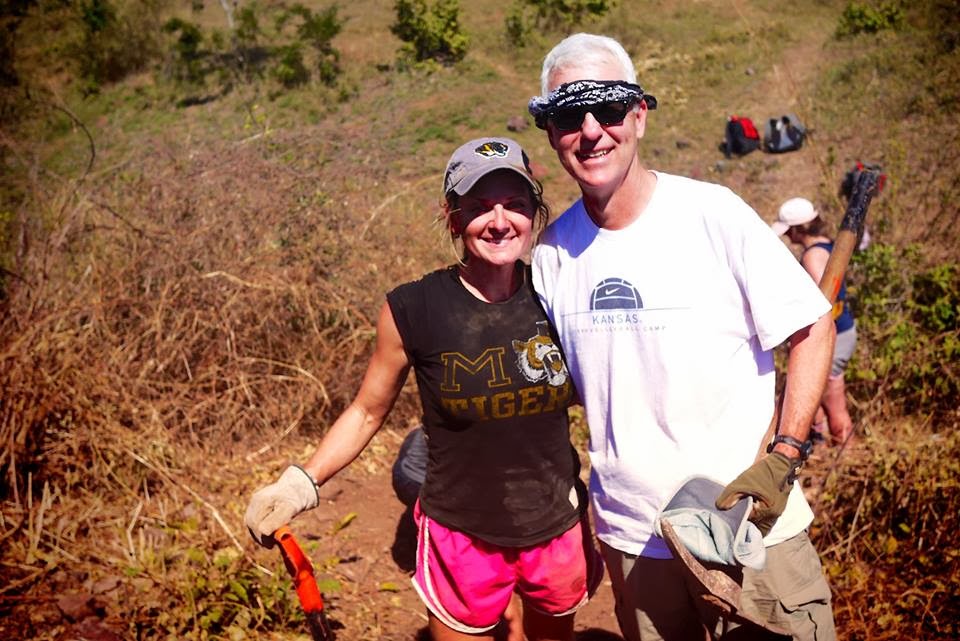
I have a new talent. I learned how to dig deep in Nicaragua. Our group was given the task of digging ditches to lay pipe for moving clean water into the homes of El Moto families. It's harder and more rewarding than you would think. We learned about the process of digging, which tools are helpful when you dig, and what to do when you think you are finished digging. I had the pleasure of digging both physically and spiritually for seven days. Here few things I learned about digging.

  • You are going to get very dirty. I'm not one that enjoys getting dirty, especially when I am sweating. Hand sanitizer and wipes are my best friends. Wouldn't you know one of the first activities we experienced when we arrived was climbing the Cerro Negro Volcano? Sunday morning after mass we all gathered together to learn what we were going to do that day. They explained it was our 'play' day and casually mentioned we were climbing a volcano. Now, when I think of playing, a vision of Mt. Everest doesn't come to mind.  However, when we pulled up to the volcano,  I thought,  this is totally doable. It didn't look that big. We were given choice of two different paths to take. The paths were described as the "hard" path and the "harder" path.  Of course I chose the harder path. Straight.up.the.vol.can.o.  It kicked my butt.  I should have a T-shirt that reads, "I climbed a Nicaraguan volcano and I'm alive!" Literally I would take one step and slide back two or three steps.  We had to dig our feet and hands into tiny hot black pebbles in the blistering sun. At first I could only take about five steps. Slowly, I worked my way up, but the breaks got longer. To add to the craziness, the volcano ash was everywhere, all over me. Every time I took a break, I realized just how much I was out of my comfort zone. I really didn't think I would ever get on the top. It was encouraging that we all were feeling the same way. I ended up joining Lauren, Alex, Eric, and Annie and we just kept cheering each other on, laughing and dying at the same time. When we finally made it, the top was most beautiful scene- you had a 360 degree view of the breathtaking Nicaraguan land. Green and thriving, what appeared to be untouched beauty. We were covered in black ash and it took quite a bit of scrubbing to get it all off. As we reflected about the day, I couldn't help but think about how symbolic that whole experience was as it took almost three hours of exhausting effort to get to the top. There were times I didn't think I would make it, completely out of breath, so incredibly filthy and frustrated at how hard it was overall. But, when we all got to the final destination, it was the best feeling.We all shared the excitement of making it...together. Sometimes you have to get dirty to get to the top.
Taking a break, about half way up.


Marc and Kayla jumping for joy at the top!


We each had our own tools to dig deep with daily.


  • You need the right people and tools: Who knew actually digging ditches for a week would bring meaning to my life? This was actually one of my favorite activities and the hardest. I know how to use a shovel, but swinging a pickaxe into a huge pile of rocks was much different than I expected. You have to have the right rhythm in your swing and know which end to use. It's hard, especially when each inch you dig deeper just produces more rocks. But when you are down in a ditch so each family can have a 100 gallons of clean water, something about inhaling dust and acquiring blisters quickly becomes no problem. The families in El Moto have never had a bathroom, a kitchen, a sink, a shower, let alone fresh water. I learned fast how easy it is to make friends with someone when you are both sweating and working as hard as you can together. We worked WITH the Nicaraguan people, young and old ---who are just like us. We talked about our families, danced while digging, ate lunch together, played games on our breaks, and laughed, ALOT. The tools you use may vary along with the people you dig with, so it's not about the digging, but the purpose of why you are digging that matters.
Digging trenches and laying pipe to bring clean water for modern bathrooms to the village of El Moto.

I was blessed to dig with Jenny (go Ole Miss!) and Nicholas one fine day.
Alex, Eric and Whitney ready to take on the rocks.

  • You need to reflect about your digging Living on Purpose was the theme for the week. The time we all spent reflecting each day at devo (devotional time), was inspirational. I loved hearing what others took away from the day and how differently the activities impacted each person. To say that I was proud, impressed, and moved by our own RU students, doesn't even give justice to what they all did and how well they did it. They shared their own thoughts with such honesty and spirituality. They thanked each other, expressed through words and silence how much they meant to each other. We all tried our best to work with all of our heart and I think at the end of each day, we knew there was always more to give. But it's important to be happy with what you did. Whether we were digging in a ditch, hugging a special child at an orphanage, doing our daily chores, or any other activity we were experiencing, we were digging deeper in our hearts to think about the meaning behind it all.  We felt guilty for what we have after seeing the circumstances and lack of resources there. But, as we discussed over and over: we all can LIVE ON PURPOSE anywhere, day in and out.That's the wonderful thing about service. It's different for everyone,  where God has placed you,  how you service Him and those around you. Many times it doesn't matter if you speak the language or not,  because love speaks one language.
My man Maldorf (from the handicapped orphanage) who reminded me how much a hug and even holding hands can mean to both people. I didn't want to let him go.


My contribution to the Amigos for Christ graffiti wall of reflection.
Our RU group started the day here as the sun would rise and end our day here as we reflected about our experiences

  • You need to take breaks with those you are digging with- The volunteers, Nicaraguan people and Amigos for Christ staff all dug together daily. Breaks were of the essence. Some took more breaks than others, but we all looked forward to them. What I looked forward to most, was the little ones. I don't know how to even begin explaining the genuine love I felt with the kids.They reminded me of my own children in so many ways. Appreciating a high five, looking for a warm smile, asking to play Temple Run on my phone, sitting in my lap to play UNO, taking a selfie with my camera, wanting to be chased, kicking the soccer ball back and forth and just holding my hand while we walked to or from the site. They opened my heart to feeling and remembering how a very small, simple gesture can bring such complete happiness. They energized my mind, body and spirit to continue on through each day. Watching the whole group engage with the children was fun as the kids loved to play jokes on us and everyone laughed together.  


Juan mastering his "selfie" with my phone. I have about 100 of these on my camera roll. Practice make perfect!
Alex and her boys, loving every minute together during the school fiesta.
I had the opportunity to spend precious time with our students (like Carolina), the staff, the Nicaraguan people and children.


  • You need to understand that digging is never done. When you dig you realize there's always a need to dig more. There might be another place that needs digging, or perhaps you need to dig deeper where you are located. Whether you choose to go somewhere else or dig where you are, it's important to do it with purpose. Just like digging, service can be hard, overwhelming, dirty, and frustrating. However, in the end, each person feels special in different ways through reflection and getting to know those they serve. Getting to know others and serving with them is key, because you both are touched in ways you don't even realize sometimes, until the time has passed. I loved serving with the RU students, the people we met through Amigos for Christ and the Nicaraguan people. Each had their own story and shared a piece of their journey with me. I hope to carry on my love for digging in KC. Everyone can benefit from digging a little deeper!
I cannot wait to return to this beautiful place.
RU students laughing about their digging.
Our work is never done, which is why we must play together!


Through it all I've had the feeling as though I've been the one being served and impacted the most. We all laughed, worked hard, danced and sometimes we cried. Service brings out a deep piece of you to share with others, which... brings love.


 Whoever you serve; 
 do it with purpose, show love, share talents, and dig deep.


SPECIAL THANKS

Ken, my companion through it all. Thank you for your wisdom and "Kenisms". You are an inspiration to each one of us. 


The RU students/ my new friends: Marc, Carolina, Annie, Lindsey, Libby, Alex, Lauren, Ryan, Annie, Alex S., Kayla, Allie, Chanelle, Sam, and Whitney, I got to know each of you in such a special way. Thanks for all the laughs and sharing yourself with me.


The Ole Miss KD girls (you know who you are)--you all are gamechangers! Thanks for letting me join in on your fun. 

The Purdue AIM group: you all were hard working and reflective. I'm glad we were able to spend the week together.

Amigos for Christ staff:  especially; Will, Herald, Walter,  Paige, Jenna, Joey, John, Elizabeth, Jeff, Kristen, Josh, and the others we had the pleasure of meeting : The encouragement and journey you supported us through will never be forgotten. Everyone who crosses paths with each of you are extremely blessed.

Monday, December 30, 2013

The Best Is Yet To Come: Ed Tech 2014 Predictions


Gotta love old blue eyes, the song has a catchy tune. As I think about the next best thing regarding technology while holding true to the traditional teaching methods which we know work, I'm hopeful.  I do believe the best is yet to come. I feel we are reaching an understanding when it comes to using technology-the balance of the old and new.


These predictions play into the point I am trying to make:

1. Microsoft Gets It's Mojo Back- Thanks to the "Surface", Microsoft is resurfacing into the mainstream ed tech arena. As much as we all like to admit that we are all saving to the "Cloud" these days, many are not. Since when did flash drives have to go away or Micorsoft for that matter? Who says the iPad has to rule? I'll be the first to admit (and my parents will back me up), I'm picky.  Picky when it comes to technology and all areas of my life, so when iPads came into the horizon back in 2010, I was skeptical. I stayed true to my Microsoft Windows programs and my PC laptop device (RU doesn't support Macs on campus anyways). But then I saw the amazing opportunities the iPad could give all students and teachers in the classroom. I jumped ship and haven't looked back until now.  Thanks to the Microsoft Surface (2nd generation), you really can have it all. An iPadish tablet including flashdrive capabilities with the Windows 8 version we all love.

2. Tron Reinvents Itself- Remember that 80's movie, Tron,  when coding a program seemed out of this world futuristic? Well now, we all can learn. Kudos to Code.org and "Hour of Code".  People use to think only those who were highly intelligent and socially inept could code.   We now live in a society where Computer Science and keeping up with programming/coding is as important as the three R's. Students of all ages can learn how to program and code AND have fun doing so. Why is this future? We need coders and programmers of all different interests and background to move our 21st century learning forward and captivate our digital natives.

3. Four Eyes are IN.  Google Glass. It's the final frontier. The future of learning, engaging and communicating with our friends, family and society. If you have been living under a rock and do not know what Google Glass is, click on the link above. In my opinion, it raises two imperative issues: 1. Policies and laws cannot keep current with technology. 2. Educators need to have these devices in their hands months prior to implementing. Time must be given for teachers to practice and facilitate the usage with their students before meaningful integration can occur.

4. Students and Educators Teaching Each Other- Let's face it, we are teaching Digital NATIVES, we are Digital IMMIGRANTS.  Great teachers know to embrace and empower their students. Great teachers know the content and understand how to teach the content in a multitude of ways to engage students. However, with the incredibly advanced integration of technology, great teachers need to rely on their students to brainstorm ways to infuse technology into assignments and products which reflect learning.  Remembering that technology is A tool, it doesn't haven to be THE tool.

5.  Hands free revolution- enough with drama already. Put your phone down and live!  A Forbes article, recently nailed it.  Checking your phone consistently shows, lack of respect, lack of attention and lack of power. Live in the moment of those you are with and show them who is really in charge...YOU, not your phone. I predict in 2014, more people (of all ages!) will take control of their lives and enjoy what this real world has to offer rather than the virtual world pinging them. I think this quote is brilliant: "One of my clients took a chapter from... the Old West, he put a wicker basket at the front of his conference room, along with a sign of Smartphone that read, Leave your guns at the door."


Best wishes to you and the New Year!

Enjoy a little Sinatra- he never goes out of style.